
Quartz
Quartz, a ubiquitous mineral in Earth's crust, plays a pivotal role in geology and Earth science. Composed of silicon and oxygen atoms in a continuous framework of SiO4 tetrahedra, quartz exhibits remarkable physical and chemical stability, making it resistant to weathering and a key indicator of geological processes. Its crystal-clear varieties like rock crystal are prized in jewelry, while its colored forms like amethyst and citrine add aesthetic value. Geologically, quartz is integral in sedimentary environments as sand grains and in hydrothermal veins as massive crystalline deposits. Its piezoelectric properties find application in technology, from watches to electronics. Understanding quartz's formation, distribution, and properties is crucial for interpreting past environments, identifying mineral deposits, and advancing materials science.
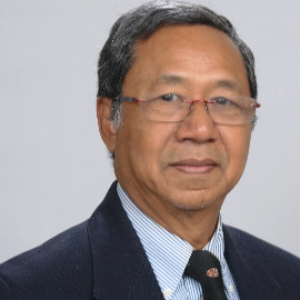
Myint Win Bo
Toronto Metropolitan University , Canada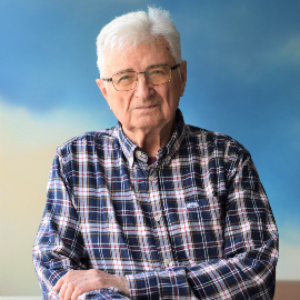
Leonid Anisimov
Volgograd State University, Russian Federation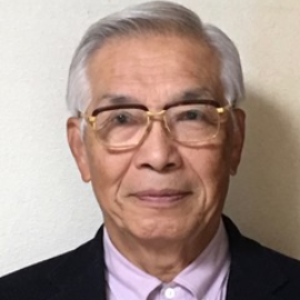
Shozo Yanagida
Osaka University, Japan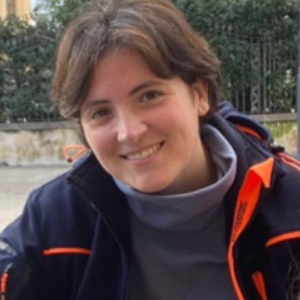
Martina Gaglioti
LIPU, Italy
Maria Vicenta Esteller Alberich
Universidad Autónoma del Estado de México, Mexico
Oscar Andres Cuanalo Campos
Universidad Popular Autónoma del Estado de Puebla, Mexico
Arun K Shandilya
Dr HSG University Sagar, India

Title : Geotechnical ground investigation
Myint Win Bo, Toronto Metropolitan University , Canada
Title : Simultaneous Global Climate Change "Heat Waves" and microwave and radio-wave from Solar Flares
Shozo Yanagida, Osaka University, Japan
Title : How subsurface waters record the earth’s history
Leonid Anisimov, Volgograd State University, Russian Federation
Title : Landslides.Rainfall one of the main triggering factors in the mountainous regions of Puebla, Mexico.
Oscar Andres Cuanalo Campos, Universidad Popular Autónoma del Estado de Puebla, Mexico
Title : Geo Education exploratory learning sessions on field and underwater
Martina Gaglioti, LIPU, Italy
Title : Linking between color and element concentration for Fluorite: An optical spectroscopic approach
Ali Almohammed, Pandit Deendayal Energy University, India