
Micropalaeontology
Micropalaeontology
Micropalaeontology is a branch of palaeontology that focuses on the study of microscopic fossils, typically those smaller than 1 mm in size. These fossils include single-celled organisms such as foraminifera, diatoms, and radiolaria, as well as small fragments of larger organisms like pollen grains and spores. By analyzing these tiny fossils found in sedimentary rocks, micropalaeontologists can reconstruct past environments, climates, and evolutionary histories spanning millions of years. This field is crucial in oil exploration, environmental monitoring, and understanding global changes in Earth's history, making it a cornerstone of geological and earth science research.
Committee Members

Myint Win Bo
Toronto Metropolitan University , Canada
Leonid Anisimov
Volgograd State University, Russian Federation
Shozo Yanagida
Osaka University, Japan Geology 2023 Speakers

Martina Gaglioti
LIPU, Italy
Maria Vicenta Esteller Alberich
Universidad Autónoma del Estado de México, Mexico
Oscar Andres Cuanalo Campos
Universidad Popular Autónoma del Estado de Puebla, Mexico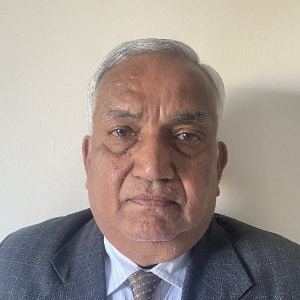
Arun K Shandilya
Dr HSG University Sagar, India

Title : Geotechnical ground investigation
Myint Win Bo, Toronto Metropolitan University , Canada
Title : Simultaneous Global Climate Change "Heat Waves" and microwave and radio-wave from Solar Flares
Shozo Yanagida, Osaka University, Japan
Title : How subsurface waters record the earth’s history
Leonid Anisimov, Volgograd State University, Russian Federation
Title : Landslides.Rainfall one of the main triggering factors in the mountainous regions of Puebla, Mexico.
Oscar Andres Cuanalo Campos, Universidad Popular Autónoma del Estado de Puebla, Mexico
Title : Geo Education exploratory learning sessions on field and underwater
Martina Gaglioti, LIPU, Italy
Title : Linking between color and element concentration for Fluorite: An optical spectroscopic approach
Ali Almohammed, Pandit Deendayal Energy University, India