
Continental Drift
Continental drift, a cornerstone of geology and earth science, refers to the gradual movement of the Earth's continents across the globe over geological time. Proposed by Alfred Wegener in 1912, this theory revolutionized our understanding of the Earth's dynamic nature. According to Wegener, continents were once part of a supercontinent called Pangaea, which began to break apart around 200 million years ago. This drift is driven by plate tectonics, the process where the Earth's lithosphere is divided into tectonic plates that float on the semi-fluid asthenosphere beneath. Evidence supporting continental drift includes the fit of South America and Africa, fossil correlations, and matching geological formations across continents. This theory explains not only the distribution of continents but also the occurrence of earthquakes, volcanic activity, and the formation of mountain ranges, significantly enhancing our comprehension of Earth's geological processes.
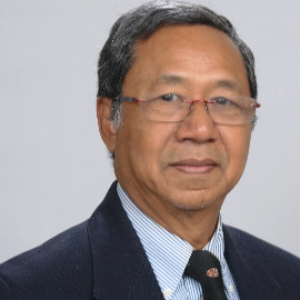
Myint Win Bo
Toronto Metropolitan University , Canada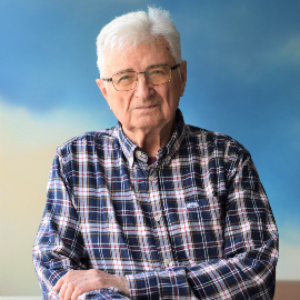
Leonid Anisimov
Volgograd State University, Russian Federation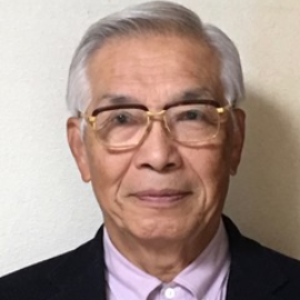
Shozo Yanagida
Osaka University, Japan
Martina Gaglioti
LIPU, Italy
Maria Vicenta Esteller Alberich
Universidad Autónoma del Estado de México, Mexico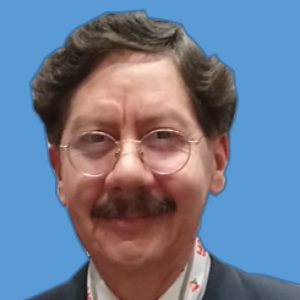
Oscar Andres Cuanalo Campos
Universidad Popular Autónoma del Estado de Puebla, Mexico
Arun K Shandilya
Dr HSG University Sagar, India

Title : Geotechnical ground investigation
Myint Win Bo, Toronto Metropolitan University , Canada
Title : Simultaneous Global Climate Change "Heat Waves" and microwave and radio-wave from Solar Flares
Shozo Yanagida, Osaka University, Japan
Title : How subsurface waters record the earth’s history
Leonid Anisimov, Volgograd State University, Russian Federation
Title : Landslides.Rainfall one of the main triggering factors in the mountainous regions of Puebla, Mexico.
Oscar Andres Cuanalo Campos, Universidad Popular Autónoma del Estado de Puebla, Mexico
Title : Geo Education exploratory learning sessions on field and underwater
Martina Gaglioti, LIPU, Italy
Title : Linking between color and element concentration for Fluorite: An optical spectroscopic approach
Ali Almohammed, Pandit Deendayal Energy University, India